As people in the UK have also been suffering from the heat, here are a few Italian tips: keep the blinds and shutters closed and the windows open, have a siesta from 1-3pm, the hottest hours of the day, and do as much hard work as you can early in the morning or late in the evening.
The hot summer has, as usual, brought us into conflict with hordes of insects which also force us to change our daily habits. Mosquitoes are the number one trouble-makers all over Italy. Many people close all the windows and doors just before dusk and open them again only after nightfall to keep from attracting them. Mosquito blinds cover many windows and these work very well as they allow you to keep your windows open, day and night.
Vape mosquito coils and Autan insect-repellent are probably the most popular chemical defences, though a lot of us try to avoid using them unless absolutely necessary. After all, if these substances are poisonous for them, they can’t be that great for us either! My solution has been to buy the biggest mosquito net I could find, in Ikea, and drape that over the bed (which looks quite nice too). When eating out I burn large citronella candles, which smell nice and look pretty, and hope for the best. Later in the year, when the grapes on our vines are ripe, we’re invaded by hornets, but there’s an effective solution to that problem too: pour wine and sugar into the lower half of an empty plastic water bottle, cut a small hole above the water line and hang it near the vine. Hornets go mad for it and in only a few days your bottle is full of dead hornets.
Pleased with myself for the effectiveness of my mosquito net idea, there I was getting ready to go to sleep last week, when I nonchalantly leapt into bed and immediately felt a hard pinch on my stomach. I jumped up, much less nonchalantly, and quickly turned on the light in time to see a black scorpion, the size of a 50 pence piece, hanging from my flesh before it unhanded me and scuttled off under the bed. To make matters worse, my partner had been lying in bed with this scorpion for a while, without suffering the consequences (though he later pointed out that, as a Scorpio, he was unlikely to be stung by a relative). We have lots of scorpions in the countryside, but this was the first time I’d ever been stung by one – admittedly, I was crushing it with my formidable weight at the time. What I can now reliably report is that scorpion stings aren’t pleasant, but don’t last long. A bee sting is far worse. I hope that is comforting news!
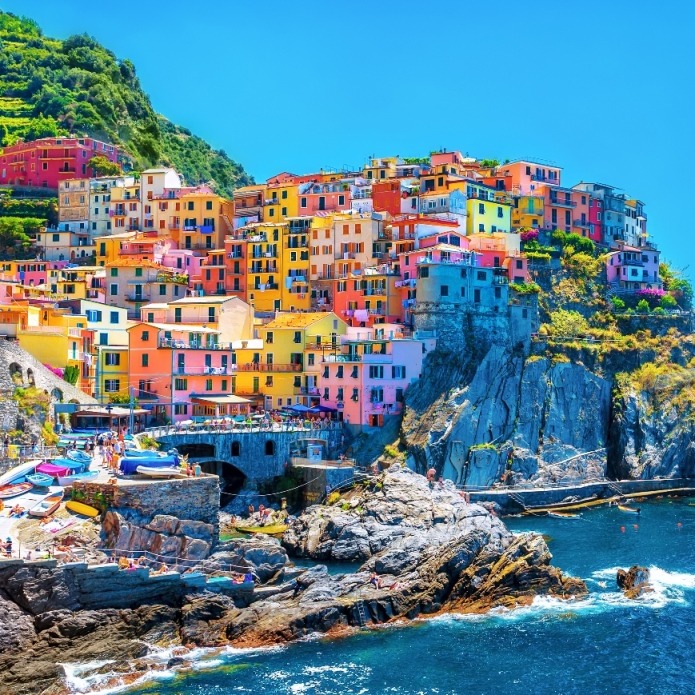
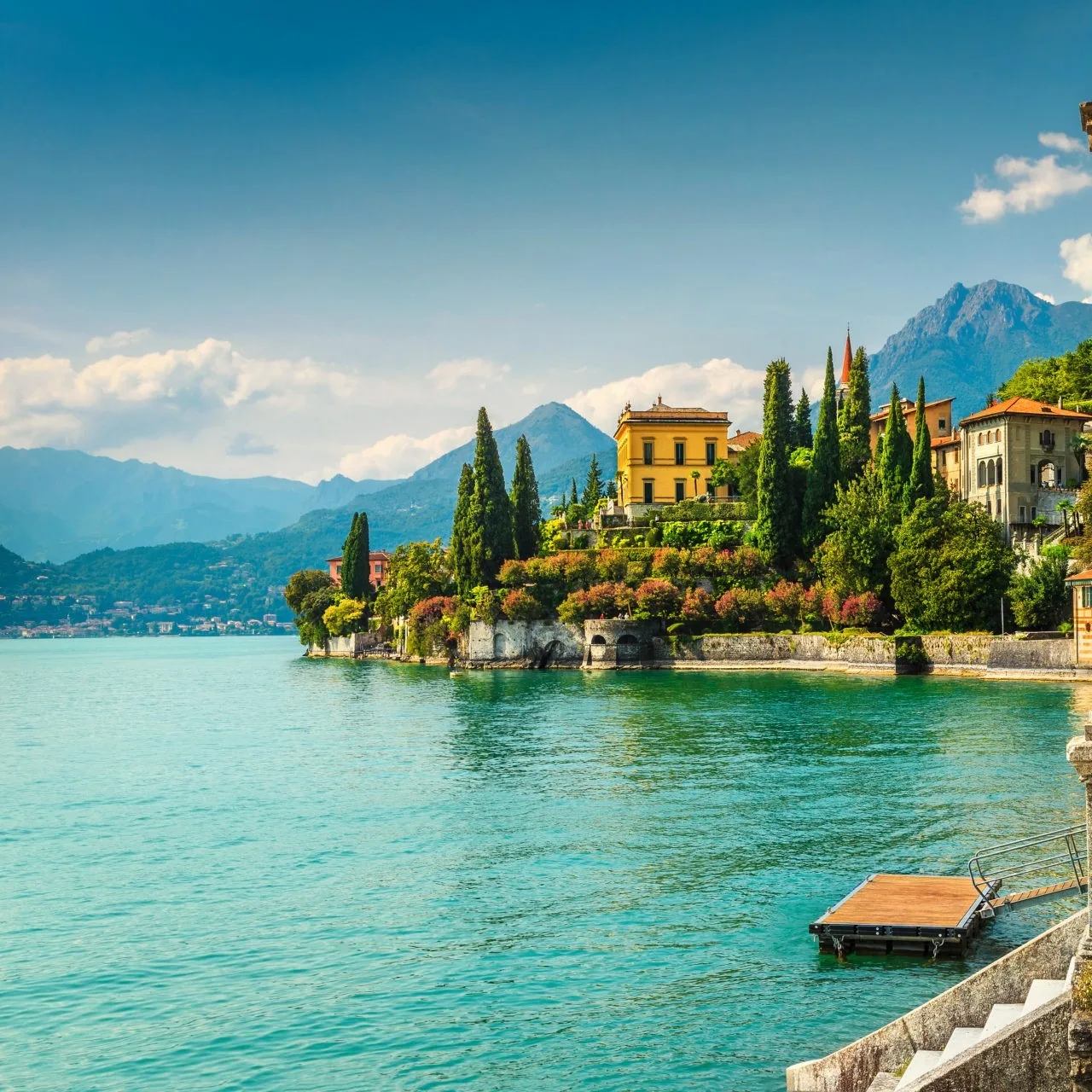
Given that we’re in the thick of the holiday season, our newsletter this month takes a look at travel in Italy. It’s been a bad year for travel worldwide, particularly air travel, so it might just be the right time to have a look at the general picture. Have a wonderful summer!
My sister is planning her annual trip over to Italy with her kids and this year, given the luck air travel is having – volcanoes, strikes, tour operators collapsing – she has decided to drive over. She’s not taking any chances! But what is the airline and general travel situation at the moment?
Flying to Italy
The situation at Alitalia seems to be much more positive than it was 12 months ago. It has now been bought by a major Italian bank and 25% of its shares are owned by KLM/Air France. Since the re-launch, the situation has improved: there have been few strikes by personnel, performance statistics are improving, the company’s level of debt has decreased and, amazingly, the airline was recently nominated Europe’s most punctual airline! Choosing the national carrier may not be a bad idea economically either: at the moment, cheap and cheerful airlines don’t seem to be particularly cheap. When I was booking a return flight to the UK last week, the BMI Baby website started off by telling me that the outbound flight was 22 euros and the return flight would be 68 euros – not bad – but by the time they’d added in all their extra costs the flight ended up costing 187 euros, more than double the initial quote!
Rail travel in Italy
Italy’s train network runs cheap and frequent trains. The state-owned railway company, Trenitalia, has a variety of different types of trains. Regionali are old, slow trains that stop at every station. Diretti are like regionali but with fewer stops; these are the cheapest trains you can take and a train timetable will always specify the kind of train.
If you are willing to pay a little more, fast Intercity and Eurostar trains connect all the major cities of Italy. While the cost of a train journey in the UK will often depend on the time of day and the day of the week, or which company runs the train, Italian train ticket prices are mainly worked out on distance, with small extra costs add depending on the type of train. This is a much easier system to cope with than what we have in the UK.
Today there are an increasing number of high-speed TAV trains. Travel times are very good: Rome-Turin in 4 hours and 10 minutes, with the same journey time for Milan-Naples. The high-speed trains are called Frecciarossa and Frecciargento and you can find out more about them on Trenitalia’s website: www.ferroviedellostato.it.
Street corner newsagents and tobacconists also sell the full national rail timetable, which costs about 8 euros and is reprinted every year. Booking is simple on the Trenitalia website or at any main railway station in Italy.
This is very important: make sure to always stamp your ticket in the station or on the platform before you board the train. If you do not stamp it, it will be considered invalid and you risk paying a fine. You need to stamp it both on the outward journey and on the return journey.
Buses, trams etc
Italian cities have a formidable battery of buses, trams and trolleybuses to get you from A to B. Each city will have its own network and its own level of service. Even rural areas are well served and it is hard to find a village that can’t be reached by public transport, even in mountainous areas.
Driving
The traffic in Italy, particularly during the holiday season, is as bad as in any industrialised country. Many city centres have now introduced congestion charging, and you can see a picture of the tell-tale sign to warn you of this on the Italian Tourist Board’s English-language website http://www.italiantourism.com/transp.html. Parking is always a challenge too, so remember that white parking bays are free and blue parking bays have to be paid for. Look around to check whether you need to put a ‘disco orario’ (or ‘parking disk’) on display (a little dial that displays your time of arrival). A-roads are free, but motorways have tolls and are fairly expensive. You can have a look at the Italian English-language motorway website: http://www.autostrade.it/en/index.html. It’s worth noting that while French motorway signs are blue, Italian motorway signs are green, just to make crossing Europe by car that bit more exciting...
See you soon!
The OGC Resource Centre does have services that they can recommend to you so please give them a call if you require help. These are property professionals they we at the OGC have either personally sourced and checked out or companies that come highly recommended by other OGC readers. This is a free service and you are under no obligation to use them so why not give it a try – you have nothing to lose.
Vince Cable is one of five Lib Dems in the Tory-Lib Dem coalition cabinet and holds the position of Business Secretary. He has come out publicly and said what we at Smart Currency have been saying for simply ages: that the high street banks are ripping their customers off.
His comments come as Panorama, in researching for their television programme on the subject, reveal that some high street banks surveyed are charging on average 32 per cent interest, despite advertised rates of around 19 per cent. With costs and other charges factored in this can reach an unbelievable 167 per cent over a year as an average rate across the high street banks.
There are fewer banks after the recent recession (and therefore less competition) and still use what some would say is an almost deliberate device of making the small print so complicated that few actually read it. This means that clients aren’t really kept in the picture. All the charges are no doubt explained, but in such a way that few ever get to know about them before running into these enormous costs.
A quite considerable sum is charged when you transfer money abroad through your bank. What we at Smart Currency have found is that we are often able to do away with certain banking fees if your currency exchange is done through us and, let’s face it any money saved on unnecessary bank charges is a real plus.
That is not the only way that the banks rip off the man on the street when sending money abroad – or indeed returning it to the UK from abroad.
Smart Currency have long commented on the fact that high street banks do not go to the money markets to get exchange rates for clients as and when they require foreign currency. Rather, they fix an exchange rate at the beginning of the day, one that what ever happens during the day will still bring them a profit. Looking at the way currencies have fluctuated recently you can imagine how high they set the bar to ensure they were not caught short at any stages – a scary thought indeed.
At Smart we call into the trading floor to get an up to the minute exchange rate just for you, at the time of your transaction. Smart charges neither commission nor do the traders take any commission cut but operate on a fixed salary. This guarantees that they have only YOUR interest at heart…indeed, we are the only currency company to operate in this way.
You will also get your own dedicated Smart trader, who you can call directly. Try speaking to anybody when phoning your bank: if I have to push one more button or speak to one more automated voice when I attempt to contact my bank I feel I will scream! Spot contracts, forward contracts, order to call, order to buy: these may all seem like confusing concepts but a few moments chat with your trader will set you on the right path – the one that is right for you.
It will cost you far less than your high street bank – guaranteed!
It’s often the people that wait until the last minute that are forced into buying at the worst times – don’t let that be you. Request a Quote from Smart Currency Exchange below or give a ring today to discuss your options!
The effect of low cost airlines on property prices
I am often asked, and not only by investors but by each and every one who wishes to buy abroad, how to identify property hotspots in the right area and at the right price.
Of major importance is easy access to your property. After all, if you are investing, that will be a real ‘plus’ to any intending renters/buyers. And if you are buying a home abroad for yourself, whether for holiday or residential purposes, you still need to know that you (and your family/visitors) can actually GET there easily and at a reasonable cost.
In recent years the inception of low-cost airlines has been a factor in determining traffic to certain destinations and, in turn, the accommodation required on arrival.
It’s a bit of a ‘chicken and egg’ scenario: is it lots of people visiting a destination who need more and cheaper transport, or does cheaper transport drive more people to a destination? For someone buying property, the end result is the same: the need for property increases and so, in direct relation, does the price of property in the area.
So…how about using this as a research tool?
I first visited Turkey’s southern shores, now-called the ‘Turquoise Coast’, in 1984. It was a far cry from what you will find today: there was not a single tourist in sight and the hotels were - let’s be kind - rustic. If someone had told me then that it would become a tourist hotspot I would have been amazed. Not surprised – it’s lovely – but amazed, as it was so quiet and so tranquil – sigh!
I have just Googled low cost flights to Turkey and come up with 24 carriers, most of them flying into this area - these include Easyjet and BA. They fly mostly into Antalya airport, currently the only major transport hub to serve the 1,000 mile long stretch of Mediterranean coastline which includes the resorts of Marmaris, Dalaman, Gocek, Fethiye, Olu Deniz, Kalkan, Kas and Alanya.
Gone are the days of tranquillity and seclusion, and property prices have risen accordingly – if I had done my homework at the time this rash of new airlines started I would have some really good investments under my belt by now!
France is another example of the low-cost airline syndrome. Once Ryanair began flying to the Dordogne in 2000, property sales in the region rocketed - and so did the prices. So much so that until recently it was estimated that property prices in the Dordogne had risen by a staggering 160% in the last seven years. Parts of Italy, Poland and Bulgaria showed the same trend, namely prices increased once they were served by the low-cost airlines.
All this to say that if you are thinking of buying abroad, a little canny research in this direction may prove very helpful.
However, a few words of warning. For years they have been promising to open a brand new airport at Gazipaşa, on the self-same Turquoise Coast in Turkey. It is expected to have a passenger capacity of 500,000 and is only a 20 minute drive from Alanya. Accordingly property prices in the Mediterranean region were expected to boom - this has been going on since 2003 and still, to my knowledge, the airport has yet to open. The same thing happened to an airport in Crete…
It also bears remembering that, during the latest economic downturn, several of the low-cost airlines have either shut down or reduced/cut their flying schedules. This being the case, you need to make sure that your property is not totally reliant on an airport that may or may not open, or indeed on just one low-cost airline that may fold.
Good luck – and remember: the OGC Resource Centre is just a phone call away at 0207 898 0549. They have oodles of advice and recommendations that may just be the thing you need to make your property journey easier! You will be under no obligation to use their suggestions nor will it cost you anything.
Are you sure you are covered?
Floods in France, fires in Greece, hurricanes in the USA, Spain and Portugal, earthquakes in Italy…these are disasters that can strike anytime, anywhere – and there is nothing we can do to stop them.
There is however something we can do that will enable us to pick ourselves up and get on with the business of living…and that’s canny home insurance with a company that is reliable and ethical.
Nothing can take the place of things like photos or books collected over years – some things are simply irreplaceable. But let’s face it – the trauma will be far less stressful if normal household contents and damage to the actual structure and fabric of your home can be sorted out at no cost to yourself.
That’s where a company like Intasure come in. Are you covered for floods, earthquakes and other natural disasters? If you place your holiday home house insurance through an insurance company abroad you may not know the answers to these and other really important aspects of your policy.
The answer is to insure with a specialist in second home and overseas property insurance right here in the UK. Intasure will offer you the reassurance of English language documents and UK back-office service and support: a plain English property insurance policy underwritten by some of the world's leading insurers and administered in the UK via helpful and knowledgeable staff.
Buy the Guide: Let me help you plan your property purchase...
Contrary to ‘the movies’, dreams usually come true only after a lot of hard work, planning and dedicated effort rather than just good luck…As South African golfer Gary Player used to say, “The harder I work, the luckier I get”!
Here is an email from one of my readers (abbreviated slightly):
Unfortunately, we have no definite time line. We want to have one [overseas property], BUT with 3 teenagers in school here in Ireland, our dream of moving abroad must wait.
We have purchased the Guide from you and love reading through it. We just have to wait ...maybe not as long as we think....maybe, just maybe we can purchase sooner than we realise. If we can go on a holiday or two in the coming few years....then....hopefully we will know exactly the place where our Heaven lies!
It is so wonderful to get all your expertise in the Guide, so glad I fell upon your site and purchased it. We TALK, THINK and DREAM of (buying abroad) each and every day.
So thanks again for all your news and updates, keep them coming! Love hearing from you - well done!!!
Best Regards,
Paula and Michael.
Plan exactly what it is you want from your dream. Travel there and find out the location that suits you best. Factor into the equation things like access, transport, cost and so on and read the Property Buying Guide if you have not already done so.
You are also welcome to phone the OGC Resource Centre where you will find a team of friendly and helpful people happy to assist with yourqueries. The number is 0207 898 0549
Have a Question?
The Overseas Guides Company (the OGC) was formed with the express aim of helping people to research and to solve the numerous questions and problems that arise when buying property and/or moving abroad.
Kim Brown, Director of the OGC, saw up close and personal just how badly things can go wrong when her parents-in-law suffered at the hands of unethical people when buying in Spain. It all ended disastrously and Kim decided then and there that this should not happen to others.
The OGC Resource Centre team will assist you to avoid pitfalls, minimise risks and save money! Talking to hundreds of people on a daily basis means that they have come across most of the problems that arise from time to time and, in many cases, have been able to help resolve them.
Here’s what a happy OGC reader has to say:
“…Let me say how happy Philip and I are with your [OGC Resource Centre] service. You have opened so many doors for us….I like to take things one step at a time, to fully take on board every situation, but I could never have been prepared for the multitude of options that you have presented us with. …You can be sure that we will be using your recommendations because we are gaining more and more confidence in your company and that is all down to the interest you take and the advice you give"
Just pick up the phone and call 0207 898 0549 and the OGC Resource Team will be happy to help you. The team is available Mon-Fri from 9am to 6pm. You are under no obligation to use any of the recommendations and this service is absolutely free at the moment, so give them a ring today!
Top Tip: What to do? Dial 112…
Did you know that there is an international emergency number you can dial anywhere in the European Union, including Italy? The number is 112.
This number works across the European Union and is answered by a multi-lingual operator. It works from any landline or mobile and will even work on a mobile with no SIM card installed.
What’s more, if you’re unable to tell the 112 operator where you are, the emergency services will be able to locate you. It will take between 3 to 150 minutes depending on the type of call (fixed or mobile).
Bye for now!
Finally, remember to email me with anything you need to know about Italy – it’s always great to hear from you. The team at The Overseas Guides Company can also answer your questions – and remember this service is completely FREE. Why not call them on 0207 898 0549 for a chat? They are all really nice people to talk to and will help you in every way they possibly can.
I am signing off with these kind words from our readers, Eric and Mary:
“I am sure it is through your efforts that many people that would have given up the idea of having a holiday home or emigrating have only succeeded by following the path through your Property Buying Guide also with your following support has made it possible. I am just at the beginning of the long path but with your help I know we will end up living in our tranquil surroundings in our dream home,